-
Motilal Colony , Dumdum, Kolkata 700079
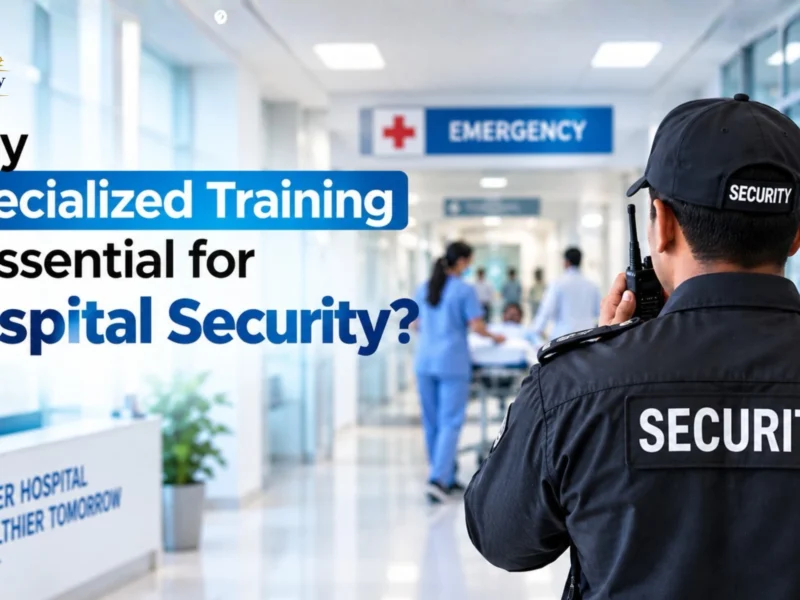
Why Specialized Training Is Essential for Hospital Security?
Home | Blogs | Why Specialized Training Is Essential for Hospital Security?
By Sathi Adhikary
September 5, 2026
Why Specialized Training Is Essential for Hospital Security?
Hospitals are places where people expect safety, care, and peace of mind. Every day, hospitals manage patients, doctors, nurses, visitors, medical equipment, confidential information, and emergency situations. This makes security a highly sensitive responsibility. Hospital Security Service in Kolkata require much more than simply placing security personnel at entrances and exits. Hospital security guards need specialized training to understand the unique environment of healthcare facilities, respond appropriately to emergencies, manage conflicts, and protect patients, staff, and property with professionalism and compassion.
Table of Contents
Beyond Manpower: Why Specialized Training Is Essential for Hospital Security
Hospital security is different from security at offices, residential buildings, shopping centres, or industrial premises. Healthcare facilities operate around the clock and frequently deal with stressful and unpredictable situations. A trained security professional must know how to remain calm, communicate respectfully, identify potential risks, and take appropriate action without unnecessarily escalating a situation.
This is why Specialized Hospital Security Services focus on trained professionals rather than simply increasing the number of guards. The right combination of training, experience, discipline, communication skills, and situational awareness can significantly strengthen the overall security environment of a hospital.
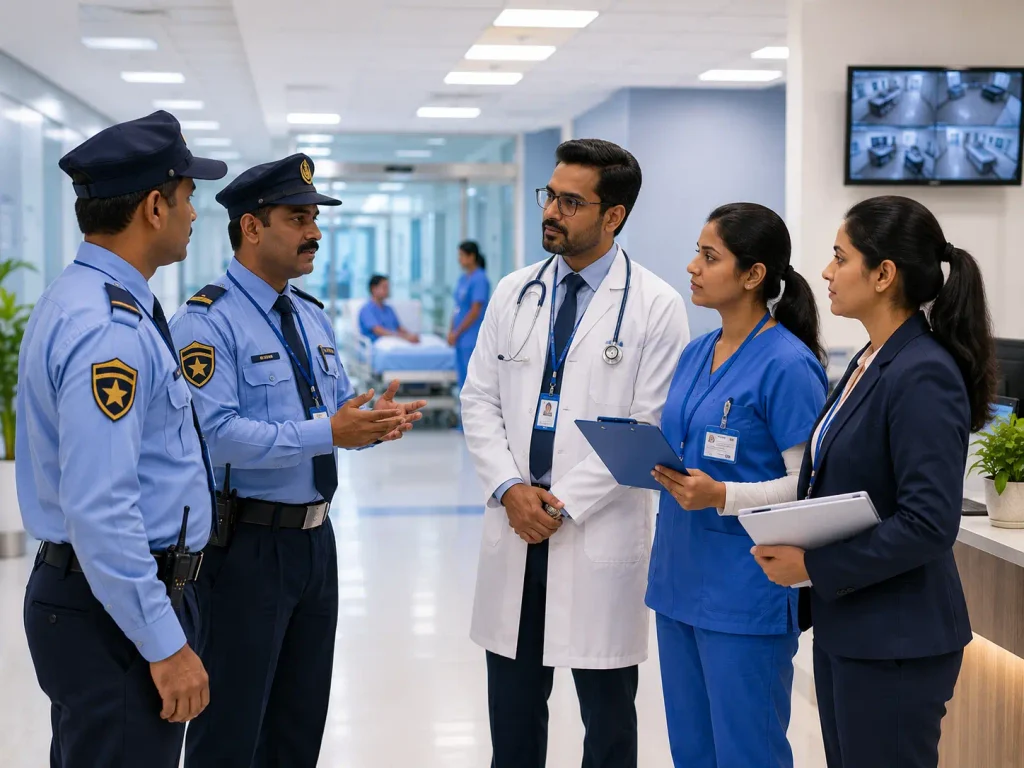
Understanding the Unique Challenges of Hospital Security
Hospitals can experience a wide range of security challenges. These may include overcrowding, disputes between visitors and staff, unauthorized access, theft, aggressive behaviour, emergency situations, and movement of sensitive medical equipment.
Unlike conventional security assignments, hospital security requires personnel to interact with people who may be anxious, distressed, confused, or emotionally overwhelmed. Trained Security Guards for Hospitals are taught to handle these circumstances professionally while maintaining a respectful approach.
A properly trained guard understands that security is not only about preventing incidents. It is also about creating a safe and supportive environment for everyone inside the facility.
Key Areas of Specialized Hospital Security Training
1. Emergency Response
Medical emergencies can happen at any time, but hospitals may also face security emergencies such as fights, unauthorized entry, fire-related incidents, or crowd-control situations. Security personnel should know how to respond quickly, follow established procedures, communicate with the appropriate team, and help maintain order.
Training helps guards understand their responsibilities during emergencies without interfering with medical professionals performing their duties.
2. Access Control and Visitor Management
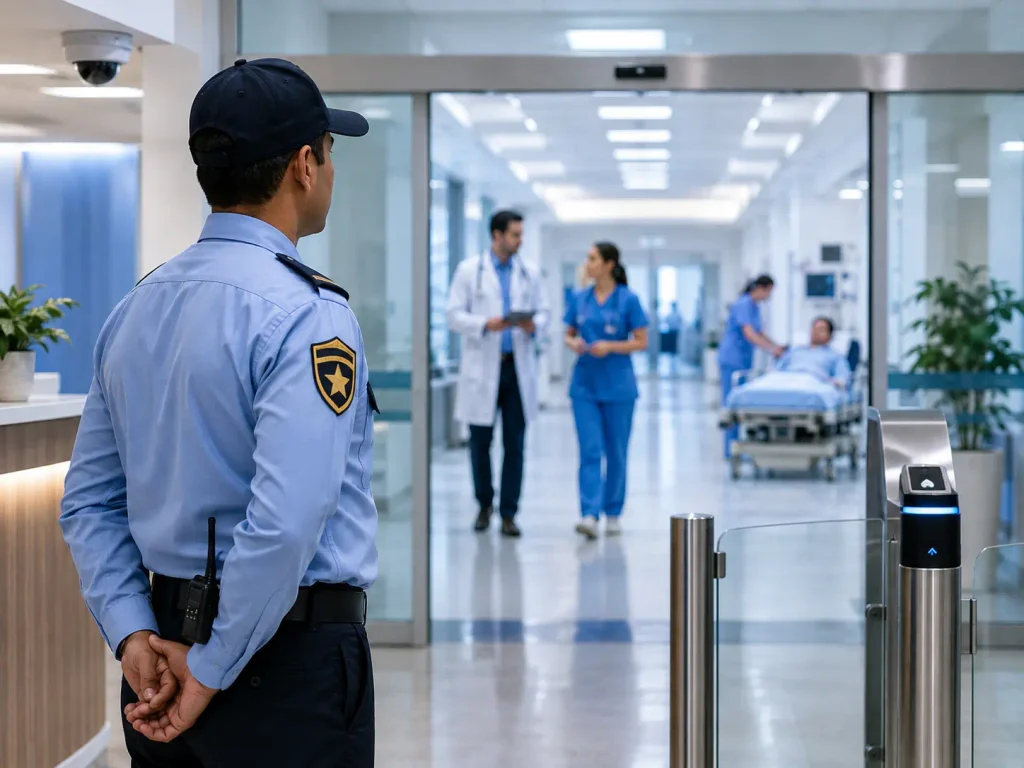
Controlling access is one of the most important aspects of Hospital Safety and Security. Hospitals often have restricted areas such as intensive care units, operation theatres, laboratories, pharmacies, staff rooms, and medical storage facilities.
Trained security personnel can monitor entry and exit points, verify visitors when required, manage visitor movement, and help prevent unauthorized access. Effective access control protects both people and valuable hospital resources.
3. Conflict and Crowd Management
Hospitals can become crowded, particularly in emergency departments and busy outpatient areas. Patients and their relatives may experience stress, frustration, or anxiety, which can sometimes result in disagreements.
Security guards need proper communication and de-escalation training to handle these situations calmly. Instead of immediately responding with force, trained professionals learn how to communicate clearly, maintain distance when appropriate, and seek support when a situation becomes difficult to control.
4. Patient and Staff Protection
Security personnel play an important supporting role in protecting doctors, nurses, administrative staff, patients, and visitors. They can monitor vulnerable areas, identify suspicious behaviour, and respond to security concerns.
A professional security team understands the importance of maintaining privacy and dignity while carrying out security responsibilities.
5. Fire and Evacuation Awareness
Security personnel are often among the first people to notice unusual situations within a facility. Basic fire-safety and evacuation training helps them respond appropriately during emergencies.
They can assist with crowd movement, keep emergency routes clear, guide people toward designated areas, and coordinate with hospital management and emergency responders according to established procedures.
Why Trained Personnel Are Better Than Simply Increasing Manpower
Having more security guards does not automatically create better security. Without appropriate training, additional manpower may not know how to respond effectively to complex situations.
Hospital Security Service in Kolkata should therefore be based on quality, training, supervision, and accountability. A smaller team of well-trained professionals can often provide more effective security than a larger team without proper preparation.
Specialized training helps security personnel understand their responsibilities, follow standard operating procedures, communicate effectively, and make sensible decisions under pressure.
The Role of Hospital Security Management
Effective Hospital Security Management involves more than assigning guards to different locations. It requires planning, risk assessment, supervision, monitoring, reporting, and continuous improvement.
A professional security provider should understand the hospital’s layout, identify vulnerable areas, establish appropriate deployment strategies, and ensure that guards understand their specific duties. Regular briefings and supervision can also help maintain consistency in service quality.
Security management should be flexible enough to adapt to changing hospital requirements, patient volume, operational schedules, and potential risks.

Technology and Trained Security Personnel Working Together
Modern security can benefit from technologies such as CCTV surveillance, access-control systems, alarms, communication equipment, and visitor-management solutions. However, technology works best when supported by trained professionals.
Security personnel can monitor surveillance systems, identify unusual activity, report incidents, and coordinate responses. Technology can provide information, but trained people are needed to interpret situations and respond appropriately.
This combination can make Hospital Safety and Security more organized, responsive, and reliable.
Benefits of Professional Hospital Security Services
Choosing a professionally trained security team can provide several important benefits:
- Improved safety: Trained personnel can identify and respond to potential security risks.
- Better emergency response: Guards understand how to act during security and evacuation situations.
- Effective access control: Restricted areas can be monitored more efficiently.
- Professional communication: Guards are trained to interact respectfully with patients, visitors, and staff.
- Reduced security risks: Proper procedures can help prevent unauthorized access, theft, and disturbances.
- Greater peace of mind: Hospital management, staff, patients, and visitors can feel more confident in the security environment.
- Consistent supervision: Professional security providers can monitor performance and maintain service standards.
Why Choose a Professional Security Partner?
Hospitals need security professionals who understand the responsibility associated with healthcare environments. A reliable Hospital Security Service in Kolkata should focus on proper recruitment, training, supervision, discipline, and ongoing performance evaluation.
At Royal Security Service, the focus should be on providing dependable security solutions tailored to the needs of each client. For healthcare facilities, this means understanding that every assignment is different and that security personnel must demonstrate professionalism, alertness, patience, and responsibility.
A Hospital Security Service in Kolkata can help hospitals build a structured security system where trained personnel, clear procedures, supervision, and technology work together.
How Specialized Training Builds Trust
Trust is especially important in healthcare. Patients and their families need to feel safe when entering a hospital, while doctors and staff need to focus on providing medical care without unnecessary security concerns.
Well-trained security guards contribute to this confidence through their behaviour and professionalism. They know when to assist, when to report an issue, and when to escalate a situation to hospital management or appropriate authorities.
This professional approach helps create a welcoming environment without compromising security.
Frequently Asked Questions
1. Why is specialized training important for hospital security?
Hospital environments involve patients, medical staff, visitors, emergencies, and sensitive areas. Specialized training prepares guards to manage these unique responsibilities professionally and safely.
2. What should hospital security guards be trained in?
Training may cover access control, visitor management, emergency response, conflict de-escalation, fire and evacuation awareness, communication, incident reporting, and general security procedures.
3. Is manpower alone enough for hospital security?
No. Simply increasing the number of guards does not guarantee effective security. Proper training, supervision, clear procedures, and appropriate deployment are equally important.
4. Can trained security guards help during emergencies?
Yes. Trained guards can support emergency procedures by maintaining order, controlling access, keeping routes clear, communicating with relevant personnel, and assisting with evacuation procedures according to the hospital’s established protocols.
5. How can hospitals choose the right security company?
Hospitals should consider a security provider’s experience, recruitment standards, training procedures, supervision, professionalism, responsiveness, and ability to customize security solutions according to healthcare requirements.
Conclusion
Hospital security requires skill, responsibility, patience, and specialized knowledge—not just manpower. From emergency response and access control to conflict management and patient protection, trained professionals play a vital role in maintaining a secure healthcare environment.
Choosing Hospital Security Service in Kolkata from a professional and reliable security provider can help hospitals strengthen their security operations while allowing medical teams to focus on patient care. With the right training, supervision, procedures, and technology, hospital security can become more responsive, organized, and dependable.
If you are looking for reliable and professionally managed security solutions for your healthcare facility, consider discussing your requirements with the Royal Security Service. A tailored security plan can help identify your facility’s needs and create a safer environment for patients, visitors, doctors, nurses, and staff.
Recent Posts
What’s Next for VIP Security? 7 Powerful Trends
October 15, 2026
How Can Physical Security Prevent Workplace Violence?
October 1, 2026