-
Motilal Colony , Dumdum, Kolkata 700079

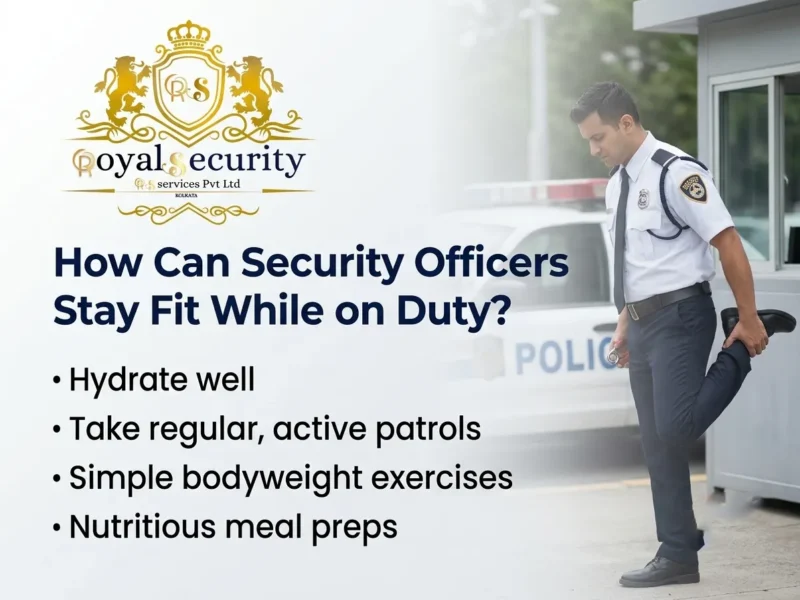
How Can Security Officers Stay Fit While on Duty?
Home | Blogs | How Can Security Officers Stay Fit While on Duty?
By Royal
August 22, 2026
How Can Security Officers Stay Fit While on Duty?
F the Matter Security Guard Agency then you must know that Security officers need strength, stamina, mobility, and alertness to perform demanding duties safely. A practical security officer fitness program can combine movement, hydration, balanced nutrition, recovery, and simple exercises that fit around long shifts.
Security officers can stay fit by combining short movement breaks, walking, stretching, bodyweight exercises, proper hydration, balanced meals, and adequate recovery. A structured fitness coaching for security officers program can make these habits easier to maintain during demanding shifts.
For the Royal Security Service, led by Indrajeet Bhattacharya, fitness can be treated as part of professional readiness alongside training, discipline, alertness, and workplace safety.
Table of Contents
Why Is Fitness Important for Security Officers?
Security work can involve prolonged standing, walking, patrolling, responding quickly to incidents, and maintaining attention for extended periods. Physical conditioning may help officers manage these occupational demands more effectively.
A useful fitness approach should focus on:
- Cardiovascular endurance
- Functional strength
- Flexibility and mobility
- Balance and coordination
- Healthy body composition
- Recovery and sleep
- Hydration and nutrition
What Should a Security Officer Fitness Program Include?
| Fitness Area | Practical Activity | Potential Benefit |
| Cardio | Brisk walking | Builds endurance |
| Strength | Squats and push-ups | Develops functional strength |
| Mobility | Dynamic stretching | Supports movement |
| Core | Planks | Improves trunk stability |
| Balance | Single-leg exercises | Develops coordination |
| Recovery | Rest and stretching | Supports recovery |
What Are 8 Ways Security Officers Can Stay Fit?
1. Walk Whenever the Duty Allows
Walking is a practical way to maintain daily physical activity. Officers can use appropriate opportunities to walk instead of remaining stationary when their duties and workplace procedures permit it.
Patrolling routes, moving between assigned areas, or taking an active break can contribute to overall daily movement.
2. Use Short Exercise Breaks
Long shifts may make conventional gym sessions difficult. Short exercise sessions can be more realistic.
Depending on workplace rules and individual fitness levels, officers can perform exercises such as:
- Bodyweight squats
- Wall push-ups
- Calf raises
- Lunges
- Planks
- Gentle mobility movements
The objective is consistency rather than exhausting the body during duty.
3. Improve Cardiovascular Endurance
Walking, cycling, swimming, jogging, or other suitable aerobic activities can support cardiovascular fitness outside working hours.
Officers should increase exercise intensity gradually, particularly if they are returning to physical activity after a long break.
4. Build Functional Strength
Security duties can require officers to move efficiently, maintain posture, and respond physically when necessary. Strength training can therefore be an important part of a best fitness program for security guards.
Exercises targeting the legs, back, shoulders, arms, and core can create a balanced routine.
5. Stretch After Long Periods of Standing
Standing for extended periods may leave the body feeling stiff. Gentle mobility exercises and stretching during appropriate breaks can help officers remain comfortable.
Useful areas to address may include:
- Calves
- Hamstrings
- Hips
- Shoulders
- Upper back
- Neck
Stretching should be controlled and comfortable rather than forced.
6. Stay Hydrated
Hydration is particularly important during physically demanding work and hot weather. Officers should follow workplace provisions and drink water regularly according to their individual needs and environmental conditions.
Adequate hydration can support normal physical performance and concentration.
7. Choose Balanced Meals
Nutrition is another important part of fitness. Officers working long shifts may be tempted to rely on convenient foods, but regular balanced meals can better support energy requirements. Fix Appointments click: https://royalssecurityservice.com/appointment
A practical plate can include:
- Protein-rich foods
- Whole grains or other carbohydrate sources
- Vegetables and fruits
- Healthy fat sources
- Adequate fluids
Individual dietary requirements vary, so personalized nutrition advice can be useful where necessary.
8. Prioritize Recovery and Sleep
Fitness is not only about exercise. Recovery is equally important.
Officers working rotating or extended shifts should make sleep and recovery a priority wherever their schedules allow. Light mobility work, rest days, and sensible exercise intensity can help create a sustainable routine.
How Can Security Companies Support Officer Fitness?
A security organization can encourage fitness without turning every officer into an athlete. Practical support may include suitable training sessions, fitness education, safe break arrangements, and access to qualified instructors.
A company-wide approach can cover:
- Basic fitness assessments where appropriate.
- Structured physical-conditioning sessions.
- Mobility and stretching education.
- Nutrition and hydration awareness.
- Injury-prevention guidance.
- Periodic fitness reviews.
- Appropriate recovery practices.
For organizations seeking professional workforce development, a Best Security Guard Agency in Kolkata can incorporate fitness awareness into broader guard training and operational preparedness.
Why Is Fitness Coaching for Security Officers Useful?
Professional fitness coaching for security officers can help create routines around the actual demands of security work. Instead of using a generic workout plan, trainers can consider shift patterns, current fitness levels, work responsibilities, available facilities, and safety requirements.
However, fitness programs should be individualized where necessary. Officers with injuries, chronic conditions, or other health concerns should seek appropriate professional advice before starting demanding exercise.
Should Security Officers Train Before or After Their Shift?
There is no single answer for everyone. Training time should depend on the officer’s shift, sleep schedule, energy levels, and personal routine.
For some officers, moderate exercise before work may be suitable. Others may prefer training after a shift or on scheduled days off.
The priority should be consistent, safe, sustainable exercise, rather than exercising at a particular time.
What Exercises Can Officers Do Without Gym Equipment?
A simple bodyweight routine can provide useful conditioning without requiring a full gym.
| Exercise | Primary Focus |
| Squats | Legs |
| Push-ups | Chest and arms |
| Planks | Core |
| Calf raises | Lower legs |
| Lunges | Legs and balance |
| Glute bridges | Hips and posterior chain |
| Wall sits | Leg endurance |
| Walking | Cardiovascular fitness |
Officers should select exercises appropriate to their fitness level and avoid movements that cause pain. Check client Testimonial click: https://bit.ly/3S8qXpv
How Can a Best Security Guard Company in Kolkata Encourage Fitness?
A Best Security Guard Company in Kolkata can encourage fitness by integrating physical preparedness into employee development rather than treating it as an optional activity.
For example, the Royal Security Service, led by Indrajeet Bhattacharya, can emphasize a broader approach that connects physical readiness with alertness, professional discipline, workplace safety, and operational responsibility.
When Should an Officer Enroll in Security Guard Fitness Training?
An officer may consider choosing to enroll in security guard fitness training when they want structured guidance, accountability, or a routine designed around the physical demands of security work.
Before beginning an intensive program, it is sensible to understand the instructor’s qualifications, program structure, safety practices, and whether individual fitness limitations are considered.
Conclusion
Security officers need more than physical strength; they need stamina, mobility, balance, alertness, and recovery habits suited to demanding shifts. A structured security officer fitness program can support these areas through practical exercise, nutrition, hydration, and rest. Royal Security Service, led by Indrajeet Bhattacharya, can incorporate fitness awareness into professional readiness while keeping safety and individual needs at the forefront. Check the map link: https://maps.app.goo.gl/Y9EPSThRBJwaceoF8
Frequently Asked Questions
How can security officers stay fit while on duty?
Security officers can stay fit through regular walking, short exercise breaks, mobility work, hydration, balanced nutrition, strength training, cardiovascular exercise, and adequate recovery.
What is the best fitness program for security guards?
The best program should combine cardiovascular conditioning, functional strength, mobility, balance, recovery, and nutrition while considering the officer’s fitness level and work schedule.
Can security guards exercise during their shifts?
They may perform suitable movement or exercise during designated breaks when permitted by workplace policies and when doing so does not compromise their security responsibilities.
Is walking enough to keep a security officer fit?
Walking is valuable for cardiovascular activity and daily movement, but a well-rounded routine may also include strength, mobility, balance, and other suitable forms of exercise.
Why is fitness important for security officers?
Fitness can support the physical demands of patrolling, standing, walking, responding to situations, and maintaining occupational readiness.
Where can security officers get fitness coaching?
Officers can look for qualified fitness professionals or structured fitness coaching for security officers that considers occupational requirements, individual ability, safety, and recovery.
Can beginners enroll in security guard fitness training?
Yes, beginners can seek an appropriately progressive program. Training should start at a manageable level and gradually increase according to individual capacity.
What Makes a Sustainable Security Fitness Routine?
A sustainable routine does not need to be complicated. Officers can begin with regular walking, basic strength exercises, mobility work, healthy meals, hydration, and sufficient recovery.
The strongest results generally come from consistency rather than occasional intense workouts. Security organizations can reinforce this approach by making fitness education accessible and aligning it with safe operational practices.
Recent Posts
How Can Security Officers Stay Fit While on Duty?
August 22, 2026
8 Ways Security Officers Can Stay Fit While on Duty
August 21, 2026

7 Pieces of Protective Equipment for Every Security Patrol
August 14, 2026