-
Motilal Colony , Dumdum, Kolkata 700079
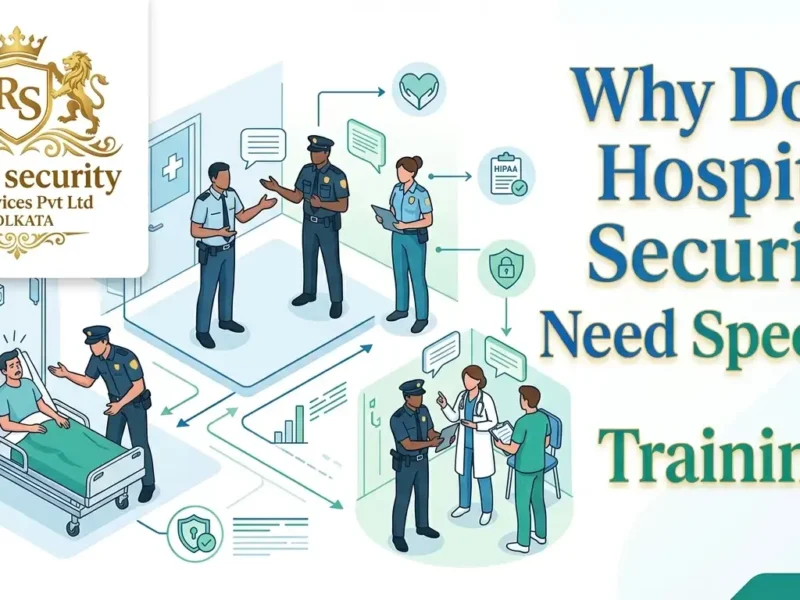
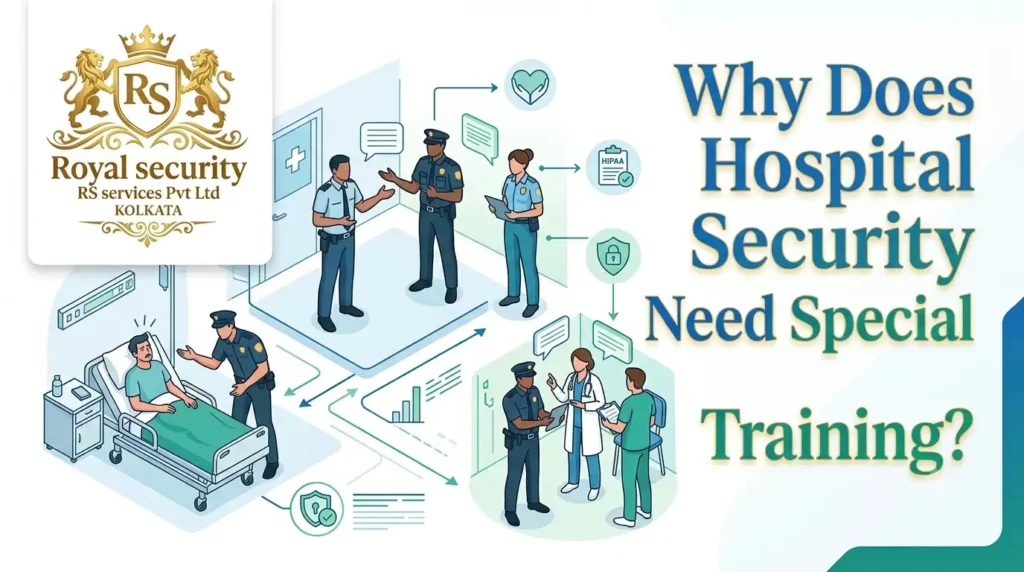
Why Does Hospital Security Need Special Training?
Home | Blogs | Why Does Hospital Security Need Special Training?
By Royal
August 28, 2026
Why Choose a Bouncer Security Agency Center for Hospitals?
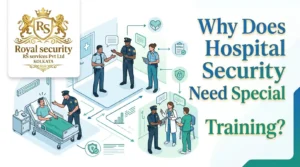
Hospital security involves more than controlling entrances. Staff may face medical emergencies, distressed relatives, overcrowding, confidential areas, and unpredictable situations. Therefore, trained personnel need communication, de-escalation, emergency-response, access-control, and patient-sensitive skills. Professional hospital security management services combine trained manpower with clear procedures, helping healthcare facilities maintain safety while protecting patients, visitors, medical staff, and hospital property.
A Bouncer Security Agency in Kolkata can provide trained personnel who understand the unique demands of healthcare environments. Specialized hospital security guard services focus on patient safety, visitor management, emergency coordination, access control, and conflict de-escalation. Unlike general guarding, hospital security requires situational awareness, professional communication, and sensitivity toward patients and families during stressful circumstances.
Table of Contents
Why Does Hospital Security Require Specialized Training with Best Bouncer Security Agency?
Why does hospital security require specialized training? Because hospitals operate continuously and involve vulnerable patients, medical professionals, visitors, emergency cases, and sensitive infrastructure.
Hospital security personnel may need to manage:
- Emergency department crowds
- Distressed or aggressive visitors
- Unauthorized access
- Restricted medical areas
- Patient and visitor movement
- Parking and entry points
- Lost children or vulnerable patients
- Medical equipment protection
- Fire or evacuation situations
- Disputes between visitors
- After-hours access
- Coordination with hospital management
A trained guard must know how to respond appropriately without unnecessarily escalating a situation.
How Is Hospital Security Different From Regular Security?
The healthcare environment creates challenges that ordinary commercial security training may not fully address.
| Hospital Security | General Security |
| Patient-sensitive communication | General visitor interaction |
| Emergency-department awareness | Routine premises monitoring |
| Crowd management | Basic crowd observation |
| De-escalation skills | General conflict response |
| Restricted-area awareness | Standard access control |
| Healthcare-specific protocols | Site-specific security procedures |
| Coordination with medical teams | Coordination with business staff |
This is why healthcare facilities can benefit from specialized hospital security guard services rather than relying exclusively on untrained manpower.
What Skills Should Hospital Security Guards Have Learn from Professional Bouncer Security Service Provider?
Effective hospital security personnel should receive training appropriate to their assigned responsibilities.
1. Communication Skills
Security staff frequently interact with patients, relatives, doctors, nurses, visitors, vendors, and emergency personnel.Open and courteous communication can help avoid confusion and misunderstandings.
2. De-Escalation
A hospital can become emotionally charged. Guards should recognize warning signs and use calm communication to reduce tension where possible.
3. Emergency Response
Personnel should understand their role during emergencies and follow the hospital’s established procedures rather than acting independently.
4. Access Control
Security teams should know which areas require restricted access and how authorized entry is verified.
5. Crowd Management
Emergency departments, registration areas, billing counters, and waiting rooms can experience sudden increases in visitor volume.
6. Observation and Reporting
Security guards should identify unusual activity and document incidents accurately according to organizational procedures.
Why Is De-Escalation Important in Hospitals Learn from Best Bouncer Security Service Provider?
Hospitals frequently deal with people experiencing fear, pain, grief, uncertainty, or frustration. A confrontational security response can intensify an already difficult situation. For Book an Appointment click: https://royalssecurityservice.com/appointment
Training should emphasize:
- Calm verbal communication
- Active listening
- Maintaining appropriate distance
- Recognizing escalating behaviour
- Calling appropriate support
- Protecting vulnerable individuals
- Following hospital protocols
- Documenting incidents afterward
The goal is to maintain safety while using the least disruptive appropriate response. You can get more information from Best security Guard Agency in Kolkata.
How Does Hospital Security Support Patients and Staff?
A professional security team contributes to a safer healthcare environment by supporting the hospital’s operational procedures.
Security personnel can help with:
- Entry and exit monitoring
- Visitor verification
- Restricted-area protection
- Emergency-area crowd control
- Staff safety
- Parking-area monitoring
- Incident reporting
- Asset protection
- Night-shift security
- Evacuation support
Security does not replace clinical or emergency personnel. Instead, it supports the hospital’s wider safety framework.
What Should Hospitals Consider Before Hiring Security Guards?
Facilities looking to hire security guards for hospitals should evaluate the provider’s training standards, supervision, deployment model, communication procedures, and experience in healthcare environments.
Hospital Security Hiring Checklist
- ✔ Relevant healthcare-security experience
- ✔ Verified personnel
- ✔ Site-specific training
- ✔ Clear reporting procedures
- ✔ Supervisory structure
- ✔ Emergency-response awareness
- ✔ Visitor-management procedures
- ✔ Conflict de-escalation training
- ✔ Access-control protocols
- ✔ Shift coverage
- ✔ Incident documentation
- ✔ Regular performance reviews
Simply increasing the number of guards does not automatically create better security.
Why Does Manpower Alone Not Guarantee Hospital Safety Know from Best Bouncer Security Agency?
More guards can improve visibility, but quantity cannot substitute for preparation.
An inadequately trained guard may not know:
- How to communicate with distressed relatives
- When to escalate an incident
- How to manage a crowded emergency area
- Which hospital areas require restricted access
- How to document an incident
- How to coordinate with hospital personnel
- How to respond appropriately to vulnerable patients
Effective security therefore combines people, training, procedures, supervision, technology, and communication. Check our News click: https://www.issuewire.com/royal-security-service-redefining-excellence-in-security-guard-services-1821410252962400
What Role Does a Bouncer Play in Hospital Security?
A bouncer’s role in a hospital should not simply involve physical presence. Depending on the facility’s needs and applicable policies, trained personnel can support crowd control, entry management, conflict prevention, and protection of restricted areas.
For hospitals seeking a Top Bouncer in Kolkata, selection should focus on professionalism, training, situational judgment, communication ability, and the specific responsibilities assigned to the personnel.
Can Bouncers Handle Hospital Emergencies?
Security personnel can support emergency management, but their role should be clearly defined by hospital protocols.
For example, they may:
- Control access around an emergency area.
- Keep pathways clear.
- Manage crowds.
- Direct visitors according to hospital instructions.
- Protect restricted areas.
- Notify designated hospital personnel.
- Assist with orderly evacuation when instructed.
Medical assessment, clinical intervention, and patient treatment remain the responsibility of qualified healthcare professionals.
How Can Hospital Security Management Services Improve Safety?
Professional hospital security management services can create a coordinated security framework rather than simply deploying individual guards.
A structured program may include:
Security assessment → Risk identification → Personnel deployment → Site-specific training → Supervision → Incident reporting → Performance review → Continuous improvement
This approach helps hospitals adapt security operations to their actual risks and workflows.
What Areas Need Special Security Attention?
Different hospital zones can present different security requirements.
| Hospital Area | Key Security Concern |
| Emergency department | Crowd and access management |
| Main entrance | Visitor screening and direction |
| ICU/restricted zones | Unauthorized access prevention |
| Maternity areas | Privacy and controlled access |
| Pharmacy | Asset and access protection |
| Parking area | Vehicle and visitor monitoring |
| Billing area | Crowd management |
| Staff areas | Authorized access |
| Night-shift zones | Visibility and response |
| Medical-record areas | Restricted access |
Security planning should therefore be location-specific rather than one-size-fits-all.
How Can Technology Support Hospital Security?
Technology can complement trained personnel.
Potential solutions include:
- CCTV monitoring
- Access-control systems
- Visitor-management systems
- Security communication devices
- Alarm systems
- Incident-management records
- Restricted-area monitoring
- Emergency communication systems
However, technology works best when personnel understand how to interpret alerts, follow escalation procedures, and coordinate with hospital management.
What Makes a Specialized Hospital Security Management Company Different?
A professional hospital security management company should understand that every healthcare facility has different workflows, patient volumes, restricted areas, operating hours, and risk profiles.
A strong provider should therefore focus on:
- Site assessment
- Appropriate personnel selection
- Healthcare-specific orientation
- Defined responsibilities
- Supervisor oversight
- Incident reporting
- Regular training
- Performance monitoring
- Coordination with hospital administration
This creates a more accountable security operation than simply filling vacant guard positions.
How Can the Royal Security Service Support Hospitals?
Royal Security Service, led by Indrajeet Bhattacharya, can approach hospital protection through trained personnel, structured deployment, supervision, and site-specific security planning.
For organizations looking to hire security guards for hospitals, the focus should be on matching personnel capabilities with actual healthcare-security requirements. A hospital may need different levels of security support across emergency departments, entrances, restricted areas, parking zones, and staff facilities.
The right security model should therefore combine trained manpower with procedures, supervision, communication, and ongoing assessment.
Why Does Hospital Security Need Specialized Training?
Hospital security requires specialized training because guards work around vulnerable patients, medical emergencies, distressed visitors, restricted areas, and sensitive facilities. Training in communication, de-escalation, access control, observation, emergency procedures, and hospital-specific protocols helps security personnel respond safely and professionally. Check Client’s Testimonial click: https://shorturl.at/XPYu4
Conclusion
Hospital security requires more than deploying additional guards. Effective protection depends on trained personnel, communication, de-escalation, access control, emergency awareness, supervision, and site-specific procedures. Royal Security Service, led by Indrajeet Bhattacharya, can support healthcare facilities with structured security solutions designed around operational needs. The right combination of skilled manpower and professional management can strengthen safety for patients, visitors, staff, and hospital assets. Check our map link click: https://maps.app.goo.gl/agoyoAY7MRTc8f7PA
Frequently Asked Questions
Why does hospital security require specialized training?
Hospital security requires specialized training because healthcare facilities involve vulnerable patients, emergencies, distressed visitors, restricted areas, and sensitive operations. Guards need appropriate communication, de-escalation, access-control, and emergency-response skills.
What are specialized hospital security guard services?
They are security services designed around healthcare-specific risks, including access control, visitor management, crowd control, emergency-area support, restricted-area protection, and incident reporting.
Should hospitals hire bouncers or regular security guards?
It depends on the hospital’s security requirements. Personnel should be selected based on their training, responsibilities, communication skills, experience, and ability to follow healthcare-facility procedures.
What should hospitals look for when hiring security guards?
Hospitals should assess healthcare experience, training, supervision, communication skills, emergency awareness, incident reporting, reliability, and the provider’s ability to develop site-specific procedures.
Can hospital security guards manage aggressive visitors?
Trained security personnel can support de-escalation and crowd management according to hospital procedures. Serious incidents should be escalated to appropriate hospital authorities or emergency services when required.
Why is crowd management important in hospitals?
Crowding can obstruct emergency pathways, create confusion, increase tension, and interfere with healthcare operations. Trained security teams can help maintain orderly movement and controlled access.
How does hospital security protect medical staff?
Security teams can support controlled access, monitor designated areas, respond to security incidents, manage crowds, and help maintain a safer working environment for healthcare professionals.
Why is site-specific security training important?
Every hospital has different entrances, departments, patient flows, restricted zones, emergency procedures, and operational risks. Site-specific training helps personnel understand their actual responsibilities.
Recent Posts
How Customer Service Affects Your Security Operation
August 29, 2026
Why Does Hospital Security Need Special Training?
August 28, 2026
How Can Security Officers Stay Fit While on Duty?
August 22, 2026